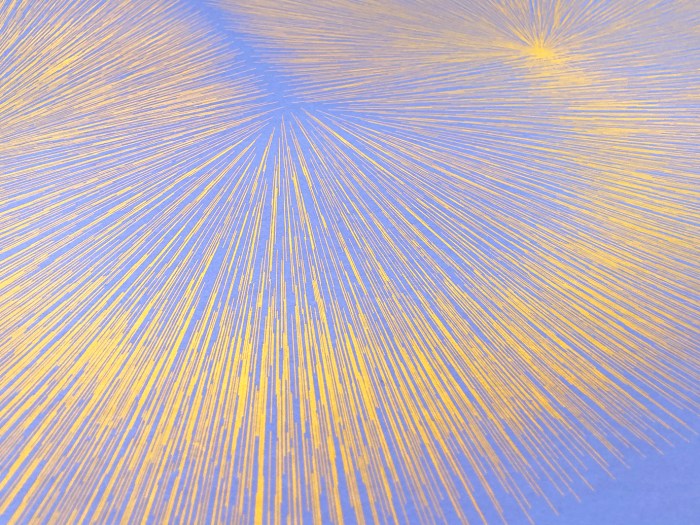
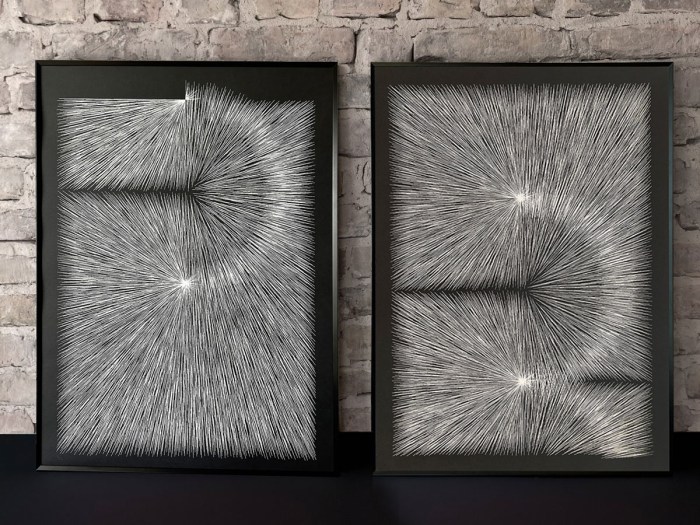
in November 2024 I exhibited several of my Afterimage screenprints during the 8th edition of BAAM in Berlin. This event took place from the 22nd till the 24th of November 2024 in Arena, Berlin. Berlin Artists Art Market is as an initiative to support local […]
All posts filed under: patterns
Afterimages
AFTERIMAGE is my new series of screenprints inspired by the optical phenomenon of afterimages. It consists of several prints portraying geometric shapes in different colors on different backgrounds, each of them being unique. Depending on the color combination, perception of the geometry changes. Check this […]
Prints
Since 2022 I started working with various manual printing techniques such as screenprinting and linocutprinting to visualize both digital and handcrafted graphics, negotiating between the precision of the digital and imperfections of the human hand. For more information check my online shop AgataKyciaLab
FELT & FOLD
Dates: Wintersemester 21/22 Project supervision: Agata Kycia, Andrea Rossi, Jörg Hugo Institution: Weißensee Kunsthochschule Berlin, Textil- und Flächendesign Students BA Textile- and Surface Design: Anna Schmökel, Ewa Nowacka, Paolina Bumeder, Zäzilie Schilling, Jinyu Li, Xingwen Pan, Antonia Schulze, Xenia Schelper Guest student MA Textile- and Surface […]
Dotted tiles
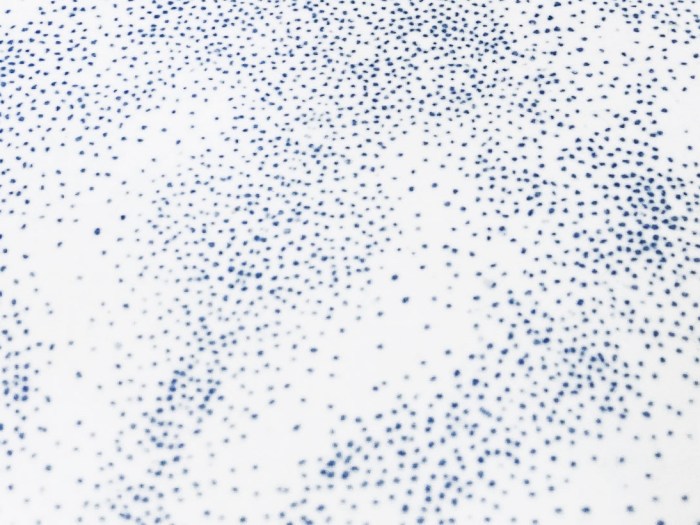
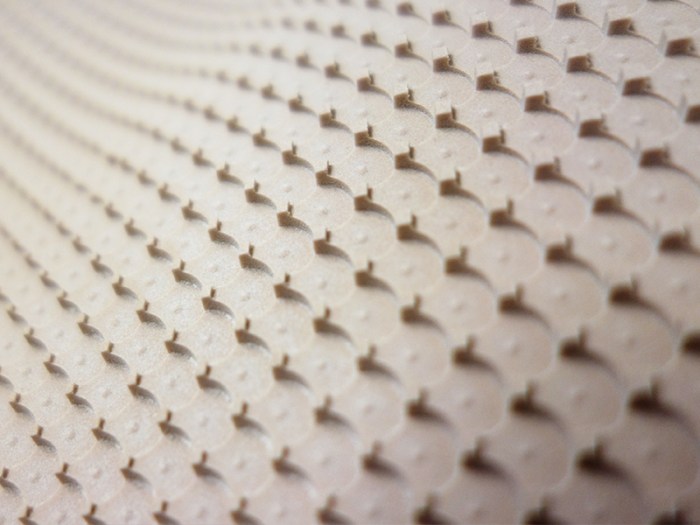
Handmade ceramic tiles designed by combining analog techniques such as clay forming and screenprinting with digital techniques for creating seamless patterns. This collection consists of three different triangular tiles which can be freely composed to create endless configurations. It is inspired by an older design […]
CAD CAM II
Dates: SoSe 2019 Institution: Weissensee Kunsthochschule Berlin, Textil- und Flächendesign Tutor: Agata Kycia Students: Nayeli Vega, Samira Akhavan, Olga Kuschchyk, Juni Neyenhuys, Luis Magg, Jasmin Sermonet, Jade Mauduit, Luise schumacher, Serafina Baucken, Joanna Czekajlo, Clara Santos Thomas, Maria Paula Barbosa Posada, Josephine Shone, Carlotta Scholz, Lisa Braun, Anna […]
3D printing from recycled waste /// Collaboration with The New Raw
In summer 2018 I had the opportunity to collaborate with Foteini Setaki and Panos Sakkas from ΤHE NEW RAW on the Second Nature Project, designing patterns for the artifacts 3D printed from the recycled marine plastic waste. Project was later exhibited by the Aikaterini Laskaridis Foundation in […]
ISOpatterns
The following wooden panels are result of the material-informed design exploration. In this case both panels are fabricated using 3 axis CNC-milling machine in Multiplex pine wood. A doubly-curved surface cuts through different layers of wood and creates linear patterns with various color tones. The […]
Digital knitting
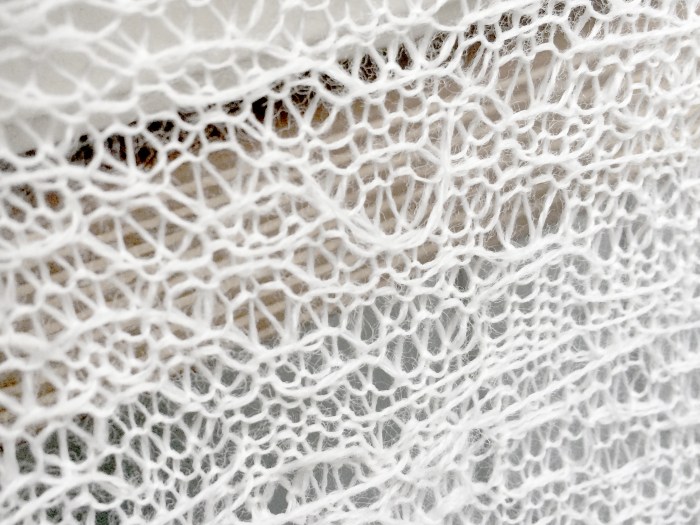
Course: DIGITALE WERKZEUGE: CAD/CAM II, 2017 / weissensee kunsthochschule berlin Supervison: Agata Kycia Supervison Knitting: Veronika Groß Students: Katrin Bergner, Sophie Schmidt, Pamina Weiß, Otto Lemme, Elena Eulitz, Eva Reischl, Xingwen Pan, Hannah Lu Verse, Sophia Köllmer, Christin-Luisa Amann, Esther Kaya Stögerer, Carolin Rüllich, Katja […]
Tile Award
DESIGN CONCEPT Proposed design merges traditional craftsmanship with advanced digital design methods. Ornamental complexity of the traditional tiles is re-interpreted and translated through computational means. The most characteristic feature of the tiles is the dotted pattern, meandering between difference and repetition. Pic. Programmable pattern configurations […]
Digital Tools –CAD-CAM I
Dates: Wintersemester 2016/2017 Institution: Weissensee Kunsthochschule Berlin, Textil- und Flächendesign Supervision: Agata Kycia Students: Charlotte Ackermann, Christin-Luisa Amann, Katrin Bergner, Elena Eulitz, Lena Ganswindt, Judith Gebhardt, Ben Gladki, Eunseo Kim, Gregory Krouze, Sophia Köllmer, Otto Lemme, Liina Leo, Ayscha Zarina Omar, Xingwen Pan, Eva Reischl, Joanna Marie Richter, […]
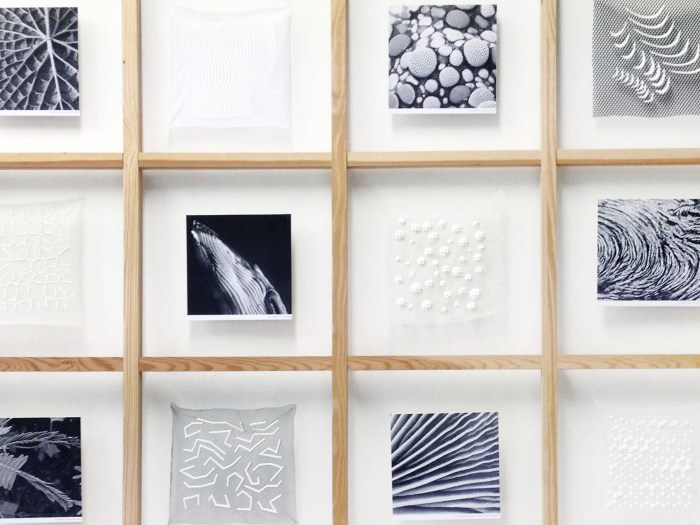
Surface articulation through digital design and fabrication tools
Ongoing research on surface articulation using CNC-milling manufacturing processes. Various fabrication strategies are applied to doubly-curves surface geometries in order to increase efficiency of the production and integrate limitations and constraints of the machines into the very early stage of the design process. CASE STUDY_01 Fabrication […]